Leaving for Europe in 50 days

“Why the hell are you visiting central Europe in the dead of winter?!” is a question I get a lot these days.

Yes, most of the cool cultural stuff in Europe happens in the warmer months. Lots of festivals and so much to do when the temperature is above freezing. But that’s also why it’s cheaper to visit in the Winter. Airlines, hotels, and local businesses charge less when there isn’t a horde of tourists descending on the location. Plus, there are all the cool cultural stuff that most people don’t see.

There are also fewer crowds. We’ll be able to more fully appreciate the experience, rather than cursing the lines of people. If you’ve ever been to Disneyland, and odds are, you have, then you can understand this.

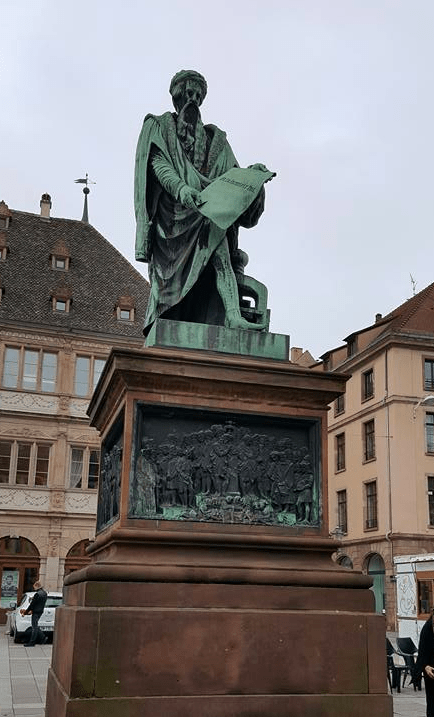
Gutenberg points out a typo.

I also believe that traveling in the off-season allows us to experience a more authentic Europe. Rather than pre-packaged tours, we can wander around, get lost, and interact with locals. We have booked some touristy things to do, like visiting the Lipizzaner stallions in Vienna, but we’re going to spend three days in Munich without planning much. We’ll be in Munich for the Silvester celebration (New Year’s Eve) and anything that happens will be totally spontaneous. Our hotel is a mere 250 meters from Marienplatz, and I don’t think we’ll be able to escape the event even if we wanted to.

I plan on walking through some of Germany’s famous Weihnachtsmärkte, including the ones the Cologne. In preparation for this, I asked Google for a map of the kölner Weihnactsmarkt, and it responded, “Here’s a list of all of them.”

“All of them? Hmm. This might be a busy day.”

I’ll be in Salzburg, Austria on December 25. Most of you know this town from The Sound of Music, but it’s also the birthplace of Mozart – and of course there’s a Mozart museum – and it’s also the location of the Stefan Zweig Center. (Feel free to google that.) Will these places be open on December 25? I’ll let you know.

There will also be opportunities to take stunning Winter photographs without a lot of people getting in the way. This point has started a conversation about whether we should take a dedicated and expensive camera, or just use the iPhone. The problem with cameras is that they are bulky and heavy, take up a lot of room in the suitcase, are prime targets of thieves, and require accessories like lenses and chargers. The iPhone is handy, small, and I’m going to take it anyway. While not as good for taking creative photographs, the iPhone camera comes with a lot of manual adjustments (I hate automatic exposures which can take all the excitement out of a photo), and I’ve been amazed at the quality of photos and videos taken with iPhones. If you have advice on this topic, please leave it in the comments.

I’m also going to buy a eSIM card so that I can have a local phone number. When we traveled to Europe in 2016, I tried to use Verizon’s services to navigate, but Google Maps said we were in Seville, Spain the entire time, though we were never in Spain. I intend to solve this with the local eSIM card. It’ll also be easier to make restaurant reservations.

I’ll be posting videos/photos (whether from the Pentax, the iPhone, or the GoPro) and stories here. Mark your calendar for December 15.

SFWA “Space is Big” bundle starts March 1

Yes, my book is included!

THE SFWA SPACE IS BIG BUNDLE

The SFWA Space is Big – Curated by Michael Mammay and the SFWA

The late, great, Douglas Adams wrote: “Space is big. You just won’t believe how vastly, hugely, mind-bogglingly big it is. I mean, you may think it’s a long way down the road to the chemist’s, but that’s just peanuts to space.” Perhaps the only thing bigger than space itself are the stories that take place within it, and in the latest bundle curated by SFWA, we have 15 great ones for you at one low price. We hope you’ll join us for this entertaining ride between the stars.

The Science Fiction and Fantasy Writers Association (SFWA) is a nonprofit organization dedicated to promoting, advancing, and supporting science fiction, fantasy, and related genre writing around the globe. For this bundle, the SFWA Independent Authors Committee had the pleasure of sorting through over nearly a hundred excellent submissions! It was tough, but we narrowed our selection down to the ones we thought you’d enjoy the most.

In Brain For Rent (Hardly Used), a conman wrestles a ship’s AI that’s taking up space in his skull. In Hometown Space Pirate, an unlikely protagonist fights to save an alien from a race of AI beings. Redshift Rendezvous is a hard science fiction work by John E. Stith, an author praised by Dan Simmons of Hyperion fame. Primary Inversion, by Nebula Award-winning author Catherine Asaro, features a bioengineered fighter pilot. In Skylark in the Fog, a group of space scavengers bite off a bigger adventure than they wanted when encountering a powerful enemy, and have to ally with a monarch who can control AIs. This was a fantastic group of submissions so solid that cutting them down to these fifteen gems was quite a task—but we think the result speaks for itself.

You’re going to love this bundle.

– Michael Mammay and SFWA

* * *

For StoryBundle, you decide what price you want to pay. For $5 (or more, if you’re feeling generous), you’ll get the basic bundle of four books in any ebook format—WORLDWIDE.

  • The Empyrean by Katherine Franklin
  • Shadows of Mars by I.O. Adler
  • Hometown Space Pirate by C.G. Harris
  • Hammer and Crucible by Cameron Cooper

If you pay at least the bonus price of just $20, you get all four of the regular books, plus ELEVEN more books for a total of 15!

  • The Venus Cycle Omnibus by Ryan T. McFadden
  • The Signal Out of Space by Mike Jack Stoumbos
  • Goodbye to the Sun by Jonathan Nevair
  • Redshift Rendezvous by John E. Stith
  • Sounding Dark by Jo Graham
  • Skylark in the Fog by Helyna L. Clove
  • Redspace Rising by Brian Trent
  • Rattle Man by E.H. Gaskins
  • Brain For Rent (Hardly Used) by D.M. Pruden
  • Primary Inversion by Catherine Asaro
  • Memory and Metaphor by Andrea Monticue

This bundle is available only for a limited time via http://www.storybundle.com. It allows easy reading on computers, smartphones, and tablets as well as Kindle and other ereaders via file transfer, email, and other methods. You get a DRM-free .epub for all books!

It’s also super easy to give the gift of reading with StoryBundle, thanks to our gift cards – which allow you to send someone a code that they can redeem for any future StoryBundle bundle – and timed delivery, which allows you to control exactly when your recipient will get the gift of StoryBundle.

Why StoryBundle? Here are just a few benefits StoryBundle provides.

  • Get quality reads: We’ve chosen works from excellent authors to bundle together in one convenient package.
  • Pay what you want (minimum $5): You decide how much these fantastic books are worth. If you can only spare a little, that’s fine! You’ll still get access to a batch of exceptional titles.
  • Support authors who support DRM-free books: StoryBundle is a platform for authors to get exposure for their works, both for the titles featured in the bundle and for the rest of their catalog. Supporting authors who let you read their books on any device you want—restriction free—will show everyone there’s nothing wrong with ditching DRM.
  • Give to worthy causes: Bundle buyers have a chance to donate a portion of their proceeds to The Science Fiction and Fantasy Writers Association!
  • Receive extra books: If you beat the bonus price, you’ll get the bonus books!

StoryBundle was created to give a platform for independent authors to showcase their work, and a source of quality titles for thirsty readers. StoryBundle works with authors to create bundles of ebooks that can be purchased by readers at their desired price. Before starting StoryBundle, Founder Jason Chen covered technology and software as an editor for Gizmodo.com and Lifehacker.com.

For more information, visit our website at storybundle.com, tweet us at @storybundle and like us on Facebook. For press inquiries, please email press@storybundle.com.

This is very exciting! Recognition from SFWA!

Last October, the Science Fiction and Fantasy Writers Association, SFWA, put out a call for submissions for a Storybundle with the tagline, “Space is Big. Really Big.” They were looking for space operas and the like. The managing editor at Water Dragon Publishing, Steven Radecki, contacted me and suggested that I submit Memory and Metaphor.

I consented, and Steven submitted it for me, along with other writers associated with his imprint. I didn’t think anything about it until this morning, Sunday, December 18, 2022, when I received another email from Steven saying that, along with 14 other stories, Memory and Metaphor had been selected!

Oh, my gosh!

I don’t want to get too far ahead of the schedule, and I’m told that things will happen in March of 2023. I will revisit this topic again then and give more details, but I felt like I had to share it with people!

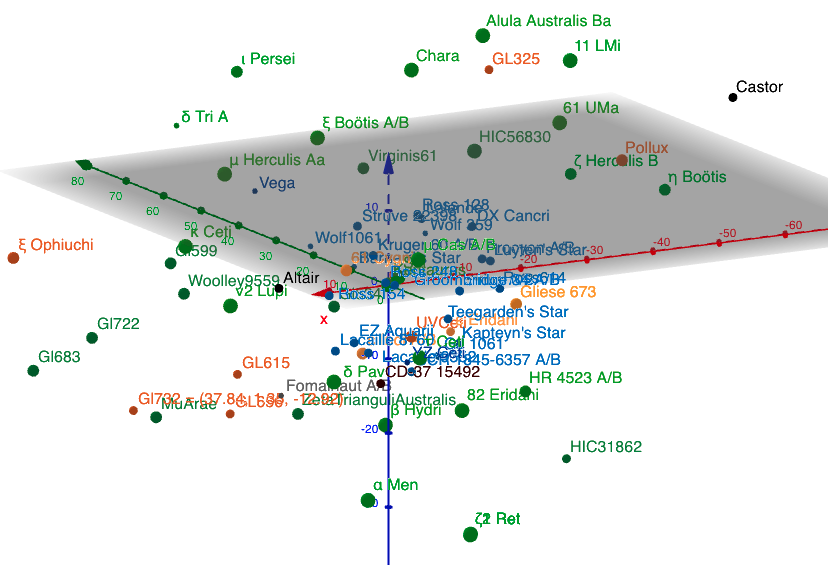
Below. The universe of Memory and Metaphor. Yes, space is big. Scale is in lightyears.

Coffee and The Age of Enlightenment.

It is not a coincidence that coffee arrived in Europe just as the Age of Enlightenment was getting started. While there are certainly a lot of other factors to consider, like humanism, the Protestant Reformation, and the Scientific Revolution, there is no doubt in this author’s/coffee drinker’s mind that given a choice between a table in a café and a table in a pub, you’re going to find more critical minds around the table in the Café.

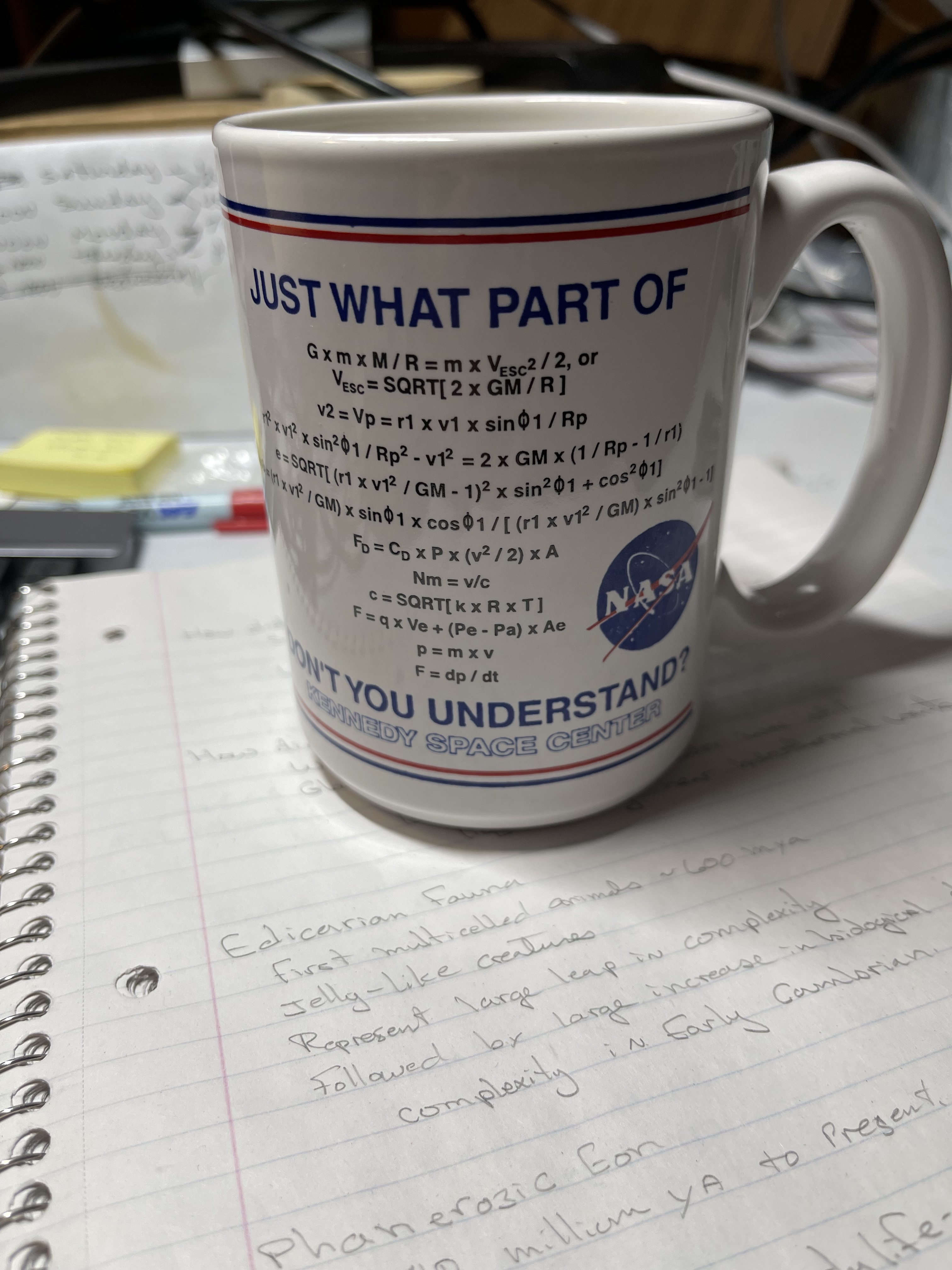
My favorite mug

According to Hannah Meyers (2005), the first coffee house in Europe opened in Vienna in 1615. Coffee had become popular in Europe since its introduction in 1526. The first coffee house opened in London in 1651, which shows just how fast this drink conquered Europe.

Dates for the beginning of the Age of Enlightenment vary, with the earliest I’ve seen given as 1685, but generally, it’s listed as the 17th and 18th Centuries.

This is not to say that interesting things didn’t happen in Europe B.C. (Before Coffee.) After all, Copernicus published his De revolutionibus orbium coelestium in 1543. I am in awe of his intellectual prowess because he was able to do it without coffee (said the woman whose coffee mug is never far from her right hand.)

And we shouldn’t forget the Chinese contribution to the era’s thinkers, and coffee did not reach China until the 19th Century (Roaster, n.d.).

Meyers, Hannah (7 March 2005). “‘Suave Molecules of Mocha’ – Coffee, Chemistry, and Civilization”. Archived from the original on 21 February 2007.

Roaster, H. C. (n.d.). China Coffee. Horsham Coffee Roaster. https://www.horshamcoffeeroaster.co.uk/pages/chinese-coffee

Where do the monsters come from?

I recently watched a movie that started off with a bang when a peaceful human village is attacked by a horde of large, orc-like monsters. Between the grisly, flesh rending scenes, I noticed many details about the monsters: (Let’s ignore that they were played by human actors, which dictated much of their form and just go with the direct observations. )

  • Though they had faces that “only a mother could love” there is evidence (torso structure and arm aticulation) that they were of hominin descent. This means that they use sexual reproduction, and some members of their society are probably dedicated to child-rearing. Monsters don’t just spring up like wildflowers.
  • They wore leather clothes and jewelry. This suggests that some members of this monster society are tanners and jewelers. It also gives us an indication that they have some concerns about personal grooming. 
  • They used distinct Iron Age weapons. They weren’t stolen, so they have some working knowledge of metallurgy. This is not insignificant.  Stupid beasts do not become blacksmiths.
    • How many of us were surprised that there are Klingons who are lawyers, scientists, and even bookkeepers? We shouldn’t have been.
  • They communicated and worked as a team. 
  • They are demonstrably carnivores who have a particular taste for human flesh. 
  • While the individuals shown on the screen were a fighting unit, they were not particularly effective as warriors. Though they outweigh a typical human by two or three times and clearly use this to be intimidating, they are easily outmatched by humans with even a modicum of martial ability. One monster was defeated by a woman who went all “momma bear” with a kitchen knife on his ass.

Now for some speculation:

  • Monsters probably don’t think of themselves as “Monsters” unless we include a Pixar series of cartoons. Bad Guys never think of themselves as the Bad Guys. Even Nazis didn’t think of themselves as the bad guys. So what is their motivation for attacking a peaceful human village? They could hunt other animals who don’t have sharp, pointy metal things to fight back with. Though the humans won the battle only with the intervention of magic, the monsters lost a good percentage of their group in standard melee battle against mostly untrained humans. Is it really worth the cost to hunt humans? Cows don’t fight back. 
  • Given the above speculation, I’m going to further speculate that they attacked the humans because:
    1. They were ordered to.
    2. They have the bigotry of religious zealots against humans.
    3. They thought they were defending their territory against the humans. This one’s a little difficult to sell considering the monsters had to march a great distance to find the humans. 

I suspect that the individual monsters really had no idea why they attacked the humans. In the movie, it turns out that the Arch-Bad Guy was looking for humans who would eventually challenge his Evil Empire, and was practicing a parched earth policy approach to the problem. 

I can imagine the pre-march speech made by the Arch-Bad Guy: “The humans eat your babies! They are forcing your children into slavery! They want to take away your swords! They worship false gods! You must be prepared to die for our holy war against the humans!”

Hey! Monsters have agency, too!

Science Fiction Fandom at a Brew Pub

Had a wonderfully exciting conversation last night at a brew pub with three incredible fans of Trek and Wars. We talked about how people like Trek for its trekkiness and Star Wars for its camp, and some people really screwed up when they tried to make Trek more like Wars. We talked about how the Enterprise, far more than even Kirk, is the face of Trek. The Enterprise is a character in the franchise that people love, and the first time it was destroyed on-screen, people cried. But it was a huge mistake to then destroy the ship in every subsequent film.
   Note to Directors: You have to let a character build a relationship with the audience before you kill it off for shock value. So put a moratorium on killing the Enterprise for a while.
   As a subset of this conversation, we talked about one of the major differences between Trek and Wars. I feel compelled to point out that nobody in the conversation ever once said that one is better than the other. We all like both Trek and Wars. (This is allowed. I checked.) But if you refuse to acknowledge the differences, then you’re missing the point.
   One such difference is how the two franchises treated the concept of fascism. The message from Wars: Fascism is bad, even if you have to fight it with religious fanaticism. We compared this to the TOS episode, Patterns of Force which discussed fascism not only in historical context but how it can come about even with the best of anti-fascist intentions.

Traveling in the era of the ‘Rona.

We’ve had this trip to Europe planned since pre-pandemic days. Still, we were willing to post-pone it if that was necessary. For quite a while, we were certain that the U.S. wouldn’t let us out, and that the E.U. wouldn’t let us in. Still, we’ve been inoculated (I’m still not clear on the difference between inoculated and vaccinated is.) and we’ll have a booster before we leave. Also, even though the infection rates here in Oregon remain comparatively low, we’ve decided to limit outside contact during this next month just as an extra layer of precaution. 

Aside from all of the normal stuff one worries about pre-departure, we’ve also been jumping through all the health hoops. Everybody wants a copy of our vaccination cards. And by everybody I mean the travel agency and all the countries we plan to visit.

Hungary insists on proof of a negative PCR test within 72 hours of entering their borders. Logistically, this has become a nightmare. We are leaving the US on Monday and will arrive in Budapest on Tuesday. The local places where we can get a PCR test here in Oregon are not open on Sundays, and so we’ll have to get the test as late as possible on Saturday in order to squeeze in under the wire in Budapest on Tuesday. If any of our flights are delayed, we’ll be screwed. Also, we’ll need something similar before we return. Our route ends in rural Sweden, where they charge about kr 1,000 (~US$116) for the test. I guess they are really proud of their PCR test. It’s going to be another game of getting the test and then sliding into customs in Dallas as the clock approaches the deadline.

For a while, the Travel Agency would not allow unescorted excursions through the target cities. (They call it “self exploration” but I call it “unescorted excursions.” Self exploration has other connotations, and I don’t want to give any false impressions about what I’m doing.) Don’t get me wrong: I understand why they did this, and I support the extra effort to ameliorate any impact tourists might have on public health, but we are spending way too much money on this trip to simply stand on a boat deck and watch Europe as we float by. We were ready to postpone or cancel the trip until the Travel Agency changed its policy. We can do whatever we want as long as we follow the rules of whichever country we’re in. The ship’s crew will also be keeping a close eye on our health. I think they feed you to the sharks if you return with a fever.

Another issue I’ll have is taking finals. The Winter term at OSU ends on December 10. I can take the tests remotely, but that means taking the test at the Hilton Budapest, or in a boat cabin.

Welcome to Capitalism.

Thirty-three days to go until our next European tour.

The last time we went to Europe, one of our cameras broke. When we pulled it out of baggage, we noticed the glass over the LCD screen on the back was cracked. It didn’t affect functionality, so it wasn’t a horrible thing. I’ve replaced that camera, and I’ve learned my lesson well: I bought a Pelican Box for it to travel and live in.

Replacing the camera was very annoying in that the Internet wanted to sell me a Canon. I have nothing against Canon cameras, but I already have a set of lenses for the Pentax, and I didn’t want to spend gobs of money on lenses.

“No! You must buy a Canon!” the Internet said.

I’m serious about this. I typed, “Pentax Cameras on sale” into Google, and it responded by directing me to Canon retailers.

“Give me a list of Pentax retailers, you little twit!” I told Google.

“No! If you buy a Pentax, I’ll be a failure!” it whined.

Even when I gave up and went to Amazon to shop (it’s a good place to find non-Amazon retailers), Amazon responded with several ads for Canon.

Dear Canon Cameras — You make a fine product, but your intrusive ads are very annoying. I’m putting you on my ‘Do Not Patronize’ list. At least until Pentax pulls the same shit.

Gender Genetics


Stop!

Before you give me your high school genetics explanation about how there are only two genders, here’s some stuff you probably didn’t learn in the 10th-grade biology class:

  • Mendel cooked his data.
  • There is evidence to support that eye color is determined by at least fifteen gene pairs. Let me know when you’ve worked out the Punnett squares for that.
  • Phenotypes do not always match genotypes.
  • Genetic cross-over happens a lot.
  • Humans are not peas.
  • Your HS biology teacher probably only had two weeks to teach a very complicated subject. A lot of corners were cut.

Consider that before attempting to explain gender genetics to me.