The Constitutional Convention – Andrea argues with her characters.

Some background: I meet with a writers’ critique group every Friday, where we read our WIPs to each other and get instant feedback. I’m going to read this to the group this Friday. Of course, by commenting on the piece, they become part of the story.

The Constitutional Convention

A Meta Story about the Republic of Kentaurus

By Andrea Monticue

It was a cold, gray, rainy April morning in Monmouth, Oregon, and my Invicta Dive Watch indicated that it was still five minutes before the meeting started. I had the meeting invitation in my daypack, but I knew it by heart: Organizational Meeting. Noon. Public Library. Topic: What the hell, sistah? Bring your laptop. Other participants: Your literary creations.

This was not the first time my “literary creations” had forced a meeting of the minds on me. Usually, they didn’t bother with an invitation to a meeting – they just showed up at my office, helping themselves to my coffee, carrying a handwritten list of grievances. This always annoyed me, considering the advanced technology I’ve bequeathed to them. They have starships that travel at many multiples of the speed of light, for crying out loud! Can’t they invest in one measly iPad?

I walked into the library meeting room expecting to see the usual suspects and I was surprised to see some additional faces. 

Bear stood near the door dressed in his medical corpsman uniform. He presented himself standing at a full seven feet tall, his tongue lolling over his wolfish teeth and his tail wagging to indicate pleasure at seeing me, greeted me at the door, and handed me a complimentary pair of smartglasses. 

“Thank you, Bear! You’re always so thoughtful.” I was pleased that it was the better iGlasses from Apple and not the minimalist Google Viewer. Bear wasn’t able to reproduce human vocalizations, so he needed the translating ability of the smartglasses to participate. Everyone in the room was wearing them. This was good because, with the exception of Sharon Manders, the former UC Santa Cruz anthropology professor sitting at the podium on a stool, I was the only one there who spoke 21st-century English.

I set my daypack down on the nearest chair and donned the smartglasses while Sharon talked. “Thank you for showing up on time, Andrea.”

I gave her the finger then looked around the room. Teagan Wough with their unreadable mien, and Etta Place, dressed in a cowboy hat, tee shirt and jeans, were sitting to one side. Xoanna Campoverde, the Minister of the Navy on Kentaurus, and Elrydien Daerîsiell, the Elf who did Campoverde’s dirty, often extrajudicial work, sat next to each other opposite from Teagan and Etta. They both had their arms crossed in silent defiance.

The biggest surprise was Senator Robert Schoonover from the Annermani Province of Kentaurus, currently chairing the Senate Intelligence Oversight Committee.  Despite his position, he wore casual slacks and a plaid vest over a simple cotton shirt. 

“Bob,” I said, giving him a nod. “Always good to see you.” I greeted the rest with a glance and gritted teeth.

“Hey, boss,” he reflected and smiled. It’s always nice to have one’s fictional characters acknowledge who’s in charge, though I wondered if Bob was just being ingratiating. 

The room was designed for business meetings with tables and hard chairs, an acoustic drop ceiling, and large windows facing the parking lot. Rain battered against the glass, causing a distraction.

Refusing to take a seat, I looked Sharon in the eyes and said, “Okay. What’s the deal? What are you pissed about now? You called this meeting, I’m sure.”

“Don’t get your dander up, Writer,” she said, raising a placating hand. “We actually think you’re doing a bang-up job on your current projects. We just feel that something is lacking.”

“Lacking?” I raised my voice louder than I intended to. “Lacking? Do you understand how many nights I lie sleepless in bed, thinking about the details of your universe?”

“C’mon, boss, that’s not fair,” Bob interjected. He was wearing that smiling politician’s face, designed to deescalate tensions among his constituents. “We’re not saying that world-building is easy or that you’re giving less than your all. Just hear us out, okay?”

“Yes, madam universe creator,” Xoanna said. Did she have the world’s sexiest accent or what? It made her sarcasm easier to swallow. “We merely want to point out a foundational lapse.”

“If I may,” Teagan interrupted. “Let me give you a scenario: The first paragraph of your first book mentions a ship traveling in space. This ship cannot just pop into existence without people to build it. And people infer a society with its attendant laws. But what are these laws?”

“I, uh, I’ve been creating them as necessary,” I offered.

“Yes, but is that fair?” Teagan said. “Especially since a solid hunk of the story takes place in a government setting.”

“Exactly,” Bob said. “How am I supposed to be a senator when I don’t know how the role is defined? What authority does my committee have? How was I elected, and who elected me?”

“The citizens, of course!” I said, feeling like I was pointing out the obvious.

“But what’s a citizen?” Xoanna asked. “Shouldn’t this be defined somewhere? And is it a direct vote, or do they choose their electors?”

I admitted internally that they had a point. “You’re asking me how the government is run. What its constitution is. That’s like asking me how the FTL engines work. I have no clue!”

“I’d like to point out that that isn’t entirely true,” Elrydien spoke for the first time. Everybody turned to look at her. “You have an education in physics, and you like to stay current on physics research. You’ve made an effort to incorporate this into the story without getting bogged down in details.”

“Yeah, that’s a good cure for insomnia,” I said.

“But look at the work you’ve done behind the scenes,” she continued. “You have literally pages of spreadsheets detailing stellar distances and how long it takes to travel between them. You’ve written detailed specifications on different models of starship engines. Your readers never see this stuff.”

“Almost sounds obsessive to me,” Bob said, smiling. If he was trying to disarm my defensiveness, he wasn’t doing the best job.

“You need a constitution,” Xoanna said. 

I thought about all the work that goes into writing a modern constitution and nearly collapsed in imaginary exhaustion.

“Nobody has to see it,” Bob said. “But it will keep our interactions consistent, and you won’t have annoyed readers sending you emails, saying, ‘In your first book, you said that the Kentauran parliament is unicameral and consisted of representatives, but in the second book, you introduce Bob as a Senator.’”

“Good point,” Sharon said.

Shit. And Bob didn’t know the half of it.

“Is that what this is all about? Okay, you’re a representative.”

“That’s not the point!” Bob objected.

“Okay, I’ll retcon the parliament as bicameral.”

Bob blew air from puffed cheeks in frustration. “Look, I don’t care. You just need to be consistent, or fans will eat you up.”

“And you can work on it when you have to take a break from your WIPs,” Etta jumped in, referring to Works in Progress. “It’s not like there’s a f’king hurry. The only lives on the line are the ones in your overactive imagination.” I could tell she was actively trying to curb her sailor’s mouth.

“If I may,” Teagan interrupted. “I don’t know anybody who’s written a constitution for a space-faring society before. Although, it wouldn’t surprise me if David Weber has. You can take all those musty, centuries-old Earth constitutions and give them a post-modern twist. What other nascent nations have had to worry about multiple species, genetic manipulations, robots, and interstellar treaties?”

“I’m not a lawyer,” I said defensively. “And I’m not a politician, or a philosopher, or any of those things one needs to be to write a constitution.”

“You’re also not a starship captain,” Etta offered. “You’re also not a spy, or a sailor, or a combat aviator, or a quantum electrician, or a diplomat, or a roboticist, or an information specialist, or an anthropologist, or a —“

“Etta, enough,” Bear calmly interrupted with his synthesized voice that sounded like Laurence Fishburne. 

“Oh, you get the idea. You’re none of these things that you write about.”

“It’s not just that,” I said apologetically. “You can’t write a constitution with just one voice. You need a chorus. It requires a meeting of the finest minds of that society. Otherwise, you risk expressing only a single ideology.”

“We can contribute,” Sharon offered.

“All of you,” I said, indicating the entire group with a gesture, “are me.” 

“I do hope you don’t believe that you and I share ideals of what a government is supposed to do,” Xoanna said, sitting up straight, ready for a fight, looking as if she’d just been insulted. 

“You can always take it to that critique group that meets on Fridays,” Bear said. “They certainly have a variety of opinions, more or less valid.”

I cringed. I could already hear the group’s questions and objections. 
A little story about my vacation in Europe

The Viking River Cruise ships (I will delete any comments about raiding monasteries) are like miniature ocean cruise ships. They only carry 190 passengers, but the amenities are much the same. They serve gourmet breakfast, lunch, and dinner, though I stopped drinking wine and eating dessert for lunch after about the fourth day.

One morning at breakfast, we were joined by a lovely couple from Arizona, Karen and Dan. We exchanged life stories and I mentioned that I was an author.

At Dinner, Karen informed me that she had purchased the Kindle version of my book, Memory and Metaphor and was really enjoying it.

Best vacation ever!!

I can deduct the cost of the trip from my taxes now, right?

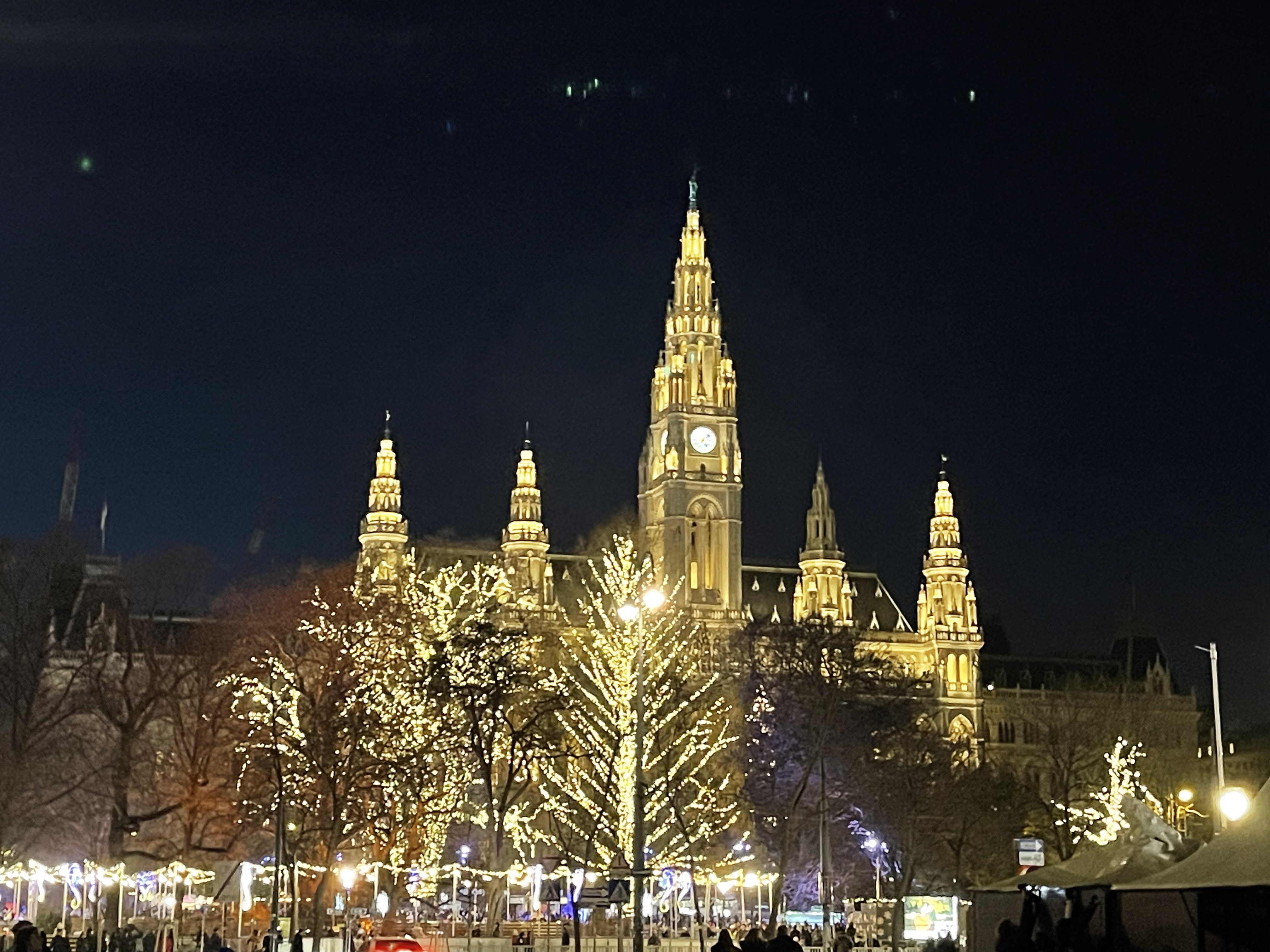
Day 14: Vienna and the Cruise Crud

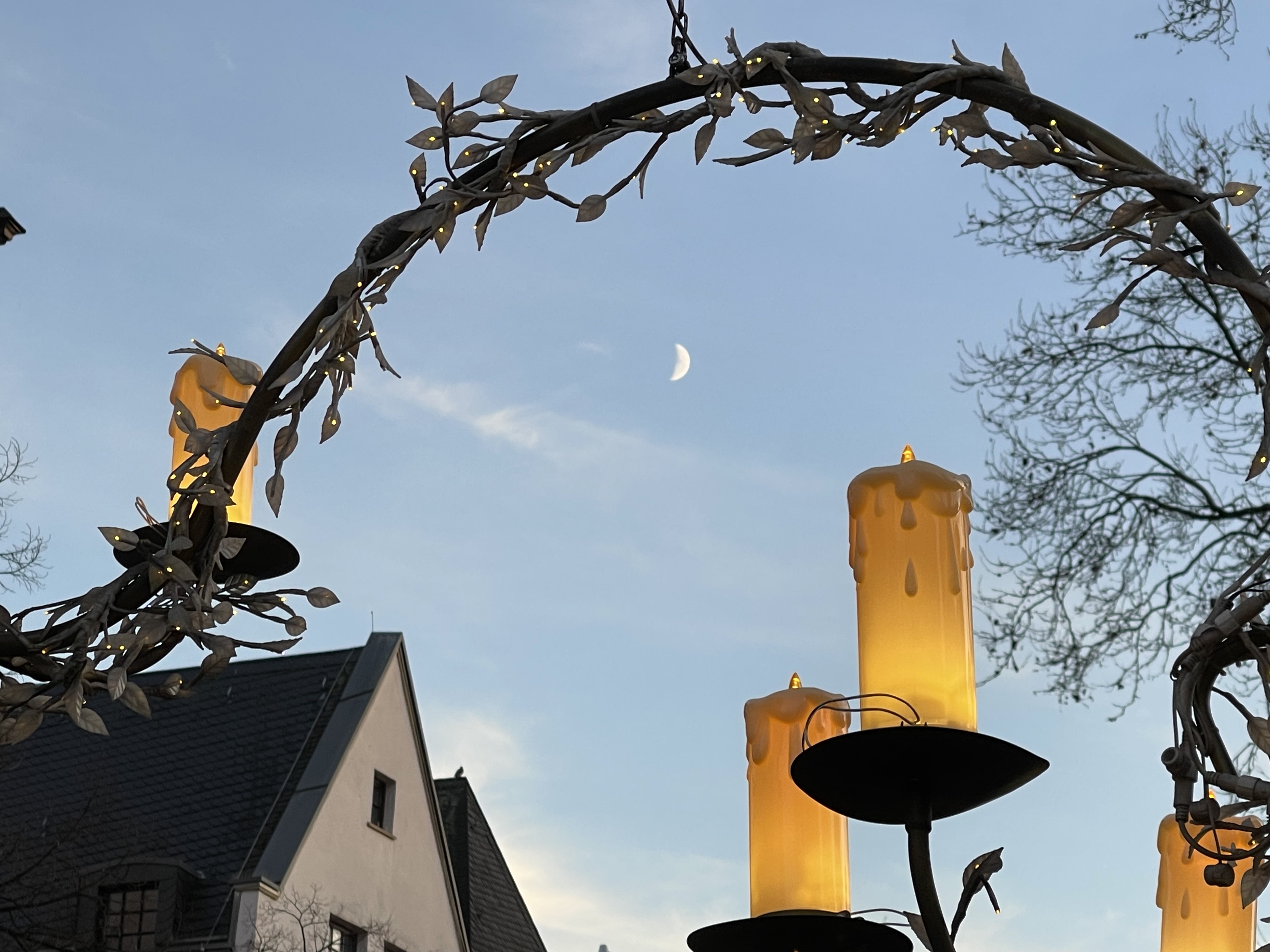
Full Moon over Vienna

While riding the bus back from Salzburg to the boat, I heard several people coughing. And not just an irritated throat cough. These coughs came from deep in the chest and sounded wet.

And I didn’t have a mask. We started wearing masks after that, but it was too late. Beth was the first to get sick, and then I came down with a congested chest and a stopped-up nose last night. One of the other passengers started calling it the “Cruise Crud.” Beth is much sicker than I am, but she’s not down and out yet. I can’t sleep with these sinuses, so I’m up writing this blog post at 03:30.

Vienna has a population of almost two million people, and it feels like it. Walking downtown, it’s difficult to avoid bumping into people, and most of them aren’t watching where they’re going. And younger people will often not even attempt to avoid you, assuming that you’ll avoid them. Even though it’s the off-season, the city feels like it’s choked with tourists, Beth and I among them. I can’t even imagine what it’s like in the warm months. The city feels like San Francisco in that respect.

However it is a clean city with low crime and unemployment rates. It has enchanting architecture, is the cradle of classical music, and there are coffeehouses everywhere.

After visiting the Lipizzaner Stallions at the Spanish Riding School, we went back to the boat for dinner, then got back on the bus to hear a Mozart and Strauss symphony. We never saw it, though, as there was some major equipment failure. So we went back to the boat again and played Scrabble.

We have one more day in Vienna (mostly spent in finding a good drug store) then we’re off to Budapest.

Day 9: Nürnberg

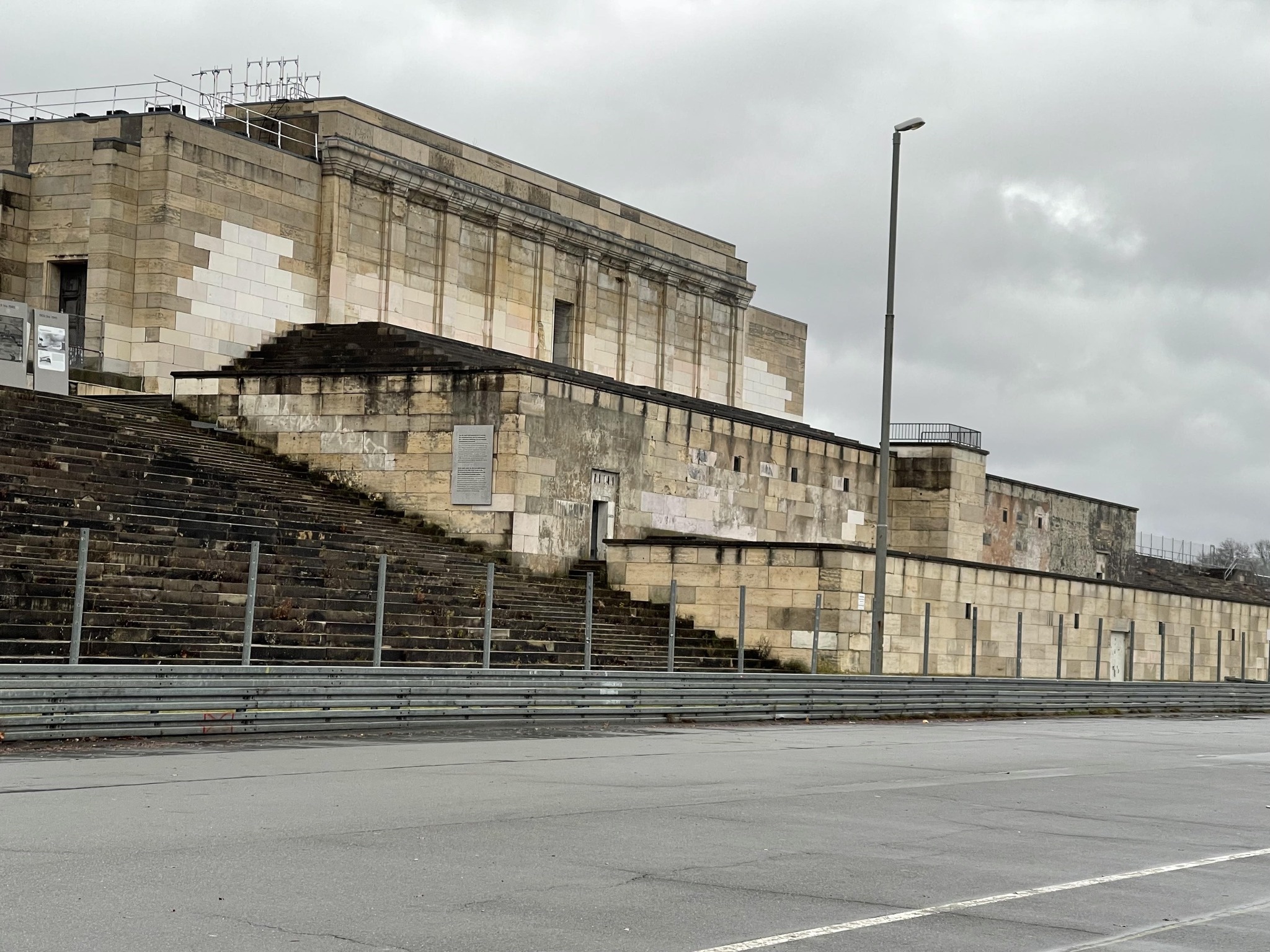
I visited Nürnberg yesterday and it was quite sobering. We read about the Second World War and we see the movies and the documentaries, but it doesn’t compare to standing in Zeppelinfeld, the same place as Hitler and the throngs of people dedicating their lives to him in the arena where Nazi rallies were held. Touching the granite and limestone is like touching that horrible history, almost hearing the crowds proclaim their love for a single genocidal, megalomaniacal man.

It’s quite a different feeling than simply reading that Germany invaded Poland in 1939.

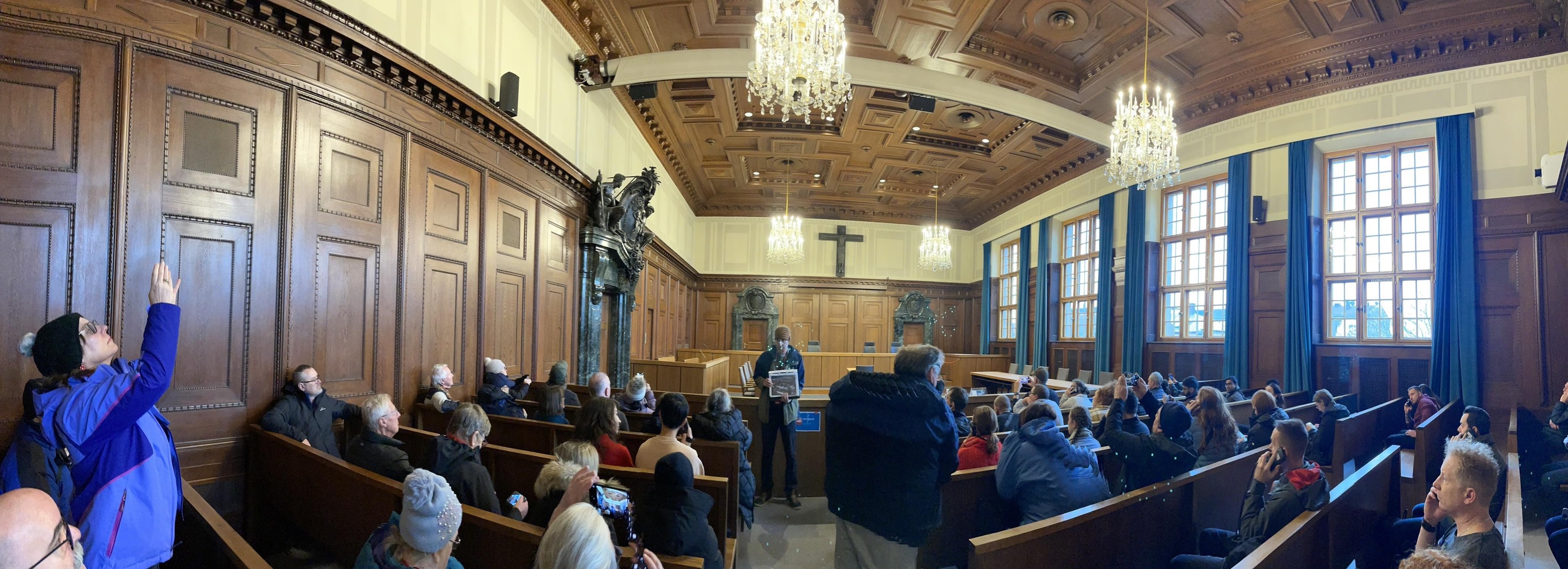
I also visited the courtroom where the Nürnberg trials were held after the war. The history was tangible, almost like the ghost of Göring was breathing down my neck. My parents and in-laws lived through that war, and Beth and I missed it by a decade. The temporal distance lessens the feeling of horror. For us, it was stories. For our parents, it was more than just headlines – it was the stories from the front, the news of relatives escaping a world gone mad, enlisting to fight in a war that made no sense.

But standing there, touching the stones, it hits you in the face. Do you feel the distance?

There are debates about what to do with these monuments to terror. The majority hold that should be preserved as tangible history, and I agree with them.

Day Three: Cologne (Köln)

I’m not a fan of large cities. Exhibit A: I used to live in the San Francisco Bay Area and today I live in rural Oregon. Exhibit B: In the Summer of 1976, I lived for three months in Los Angeles, and I still haven’t recovered.

As a city of 1 million residents, Cologne isn’t bad. It doesn’t smell like a big city – at least not the parts I visited. It’s clean, and it’s pretty. I still wouldn’t live there, but I don’t mind visiting. That’s not to say that Cologne doesn’t have big city problems: I was approached by three beggars while walking about.

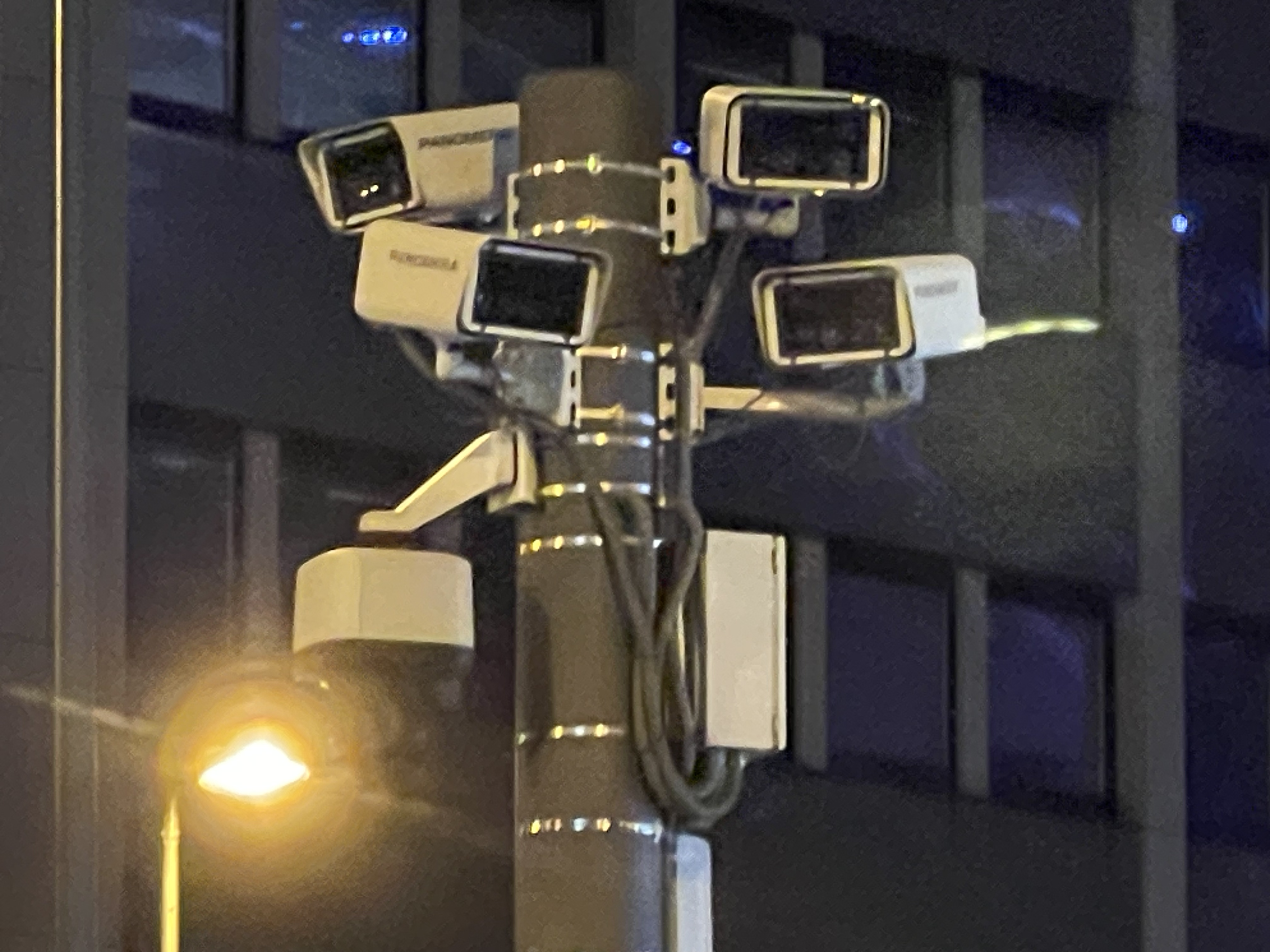
Trouble in Paradise: Surveillance cameras on a street corner in Cologne, Germany

Until today, my only use of the German language on this trip was to translate the label of a bottle of Coca-Cola, which didn’t have any high-fructose corn syrup, to the surprise of everybody sitting at the same table. And today, I failed my practical test when I asked for “Zwei heiße Schokolade, bitte” and the guy responded in English. Damnit! However, I later navigated conversations with a pharmacist (I asked for ibuprofen) and a barista (I asked for a small coffee to drink “für hier”.) without anybody getting their feelings hurt. I even told another pedestrian that, “Der Stadtbus ist dort drüben” when she asked for directions to a specific bus line.

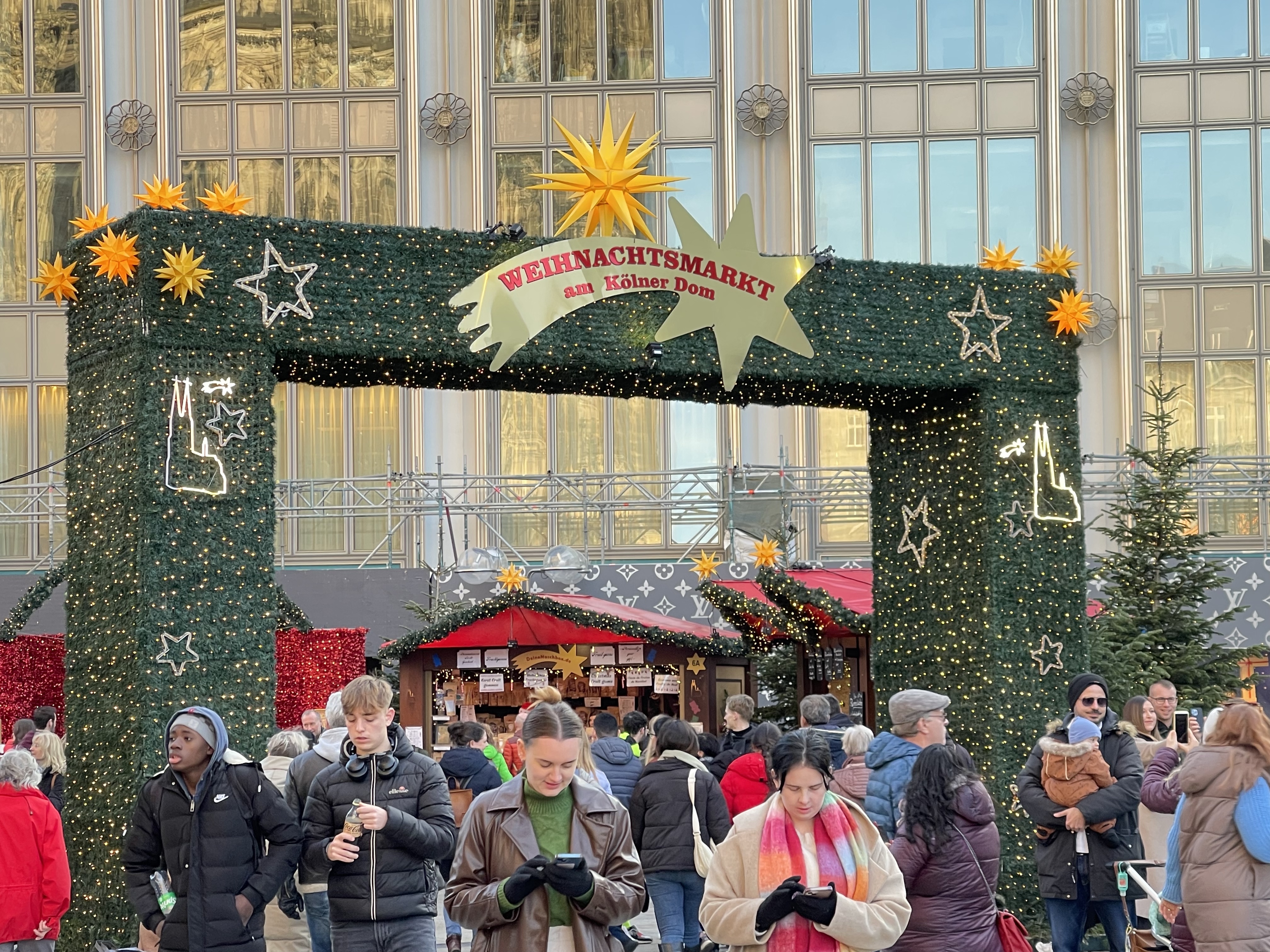
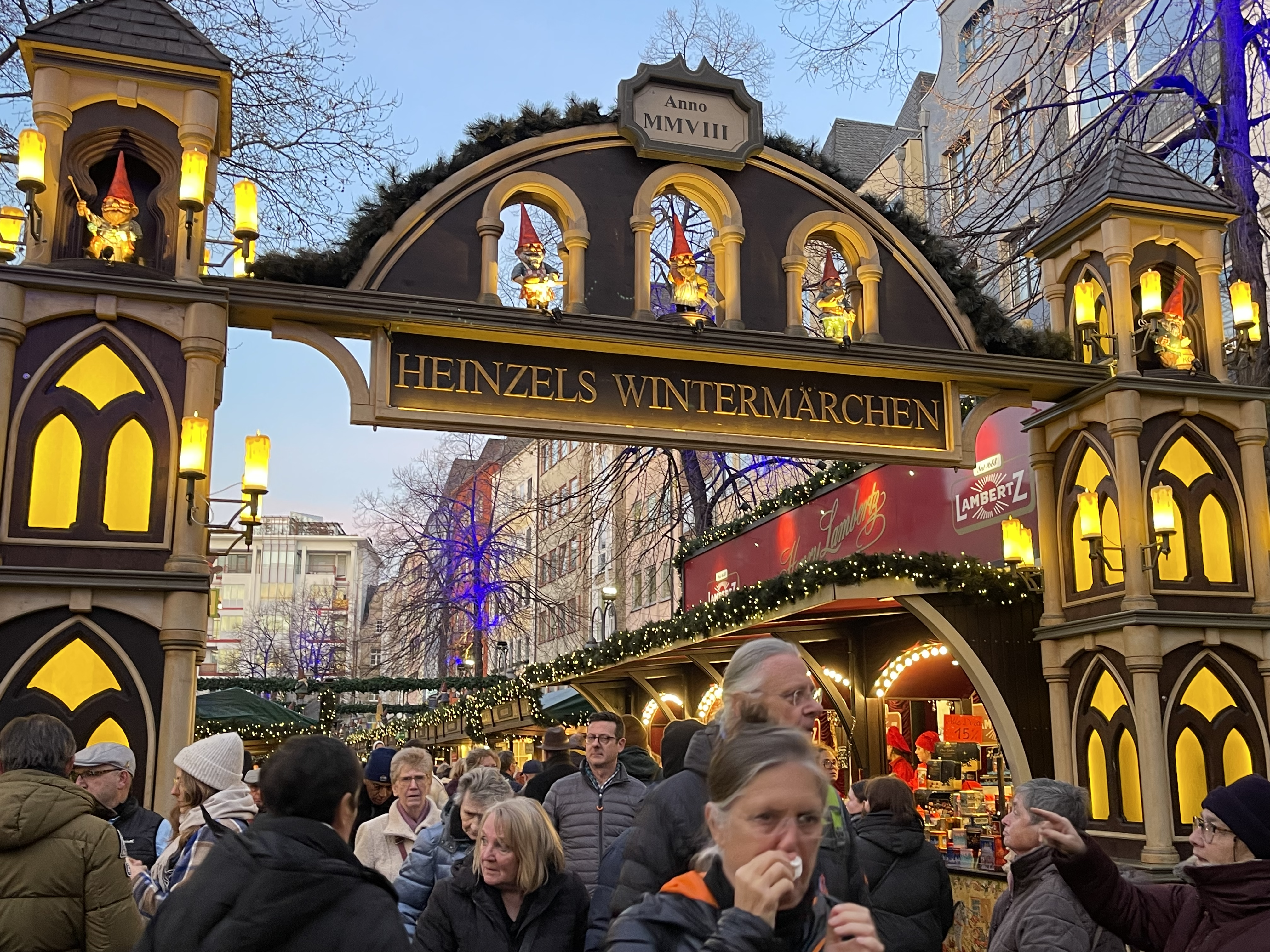
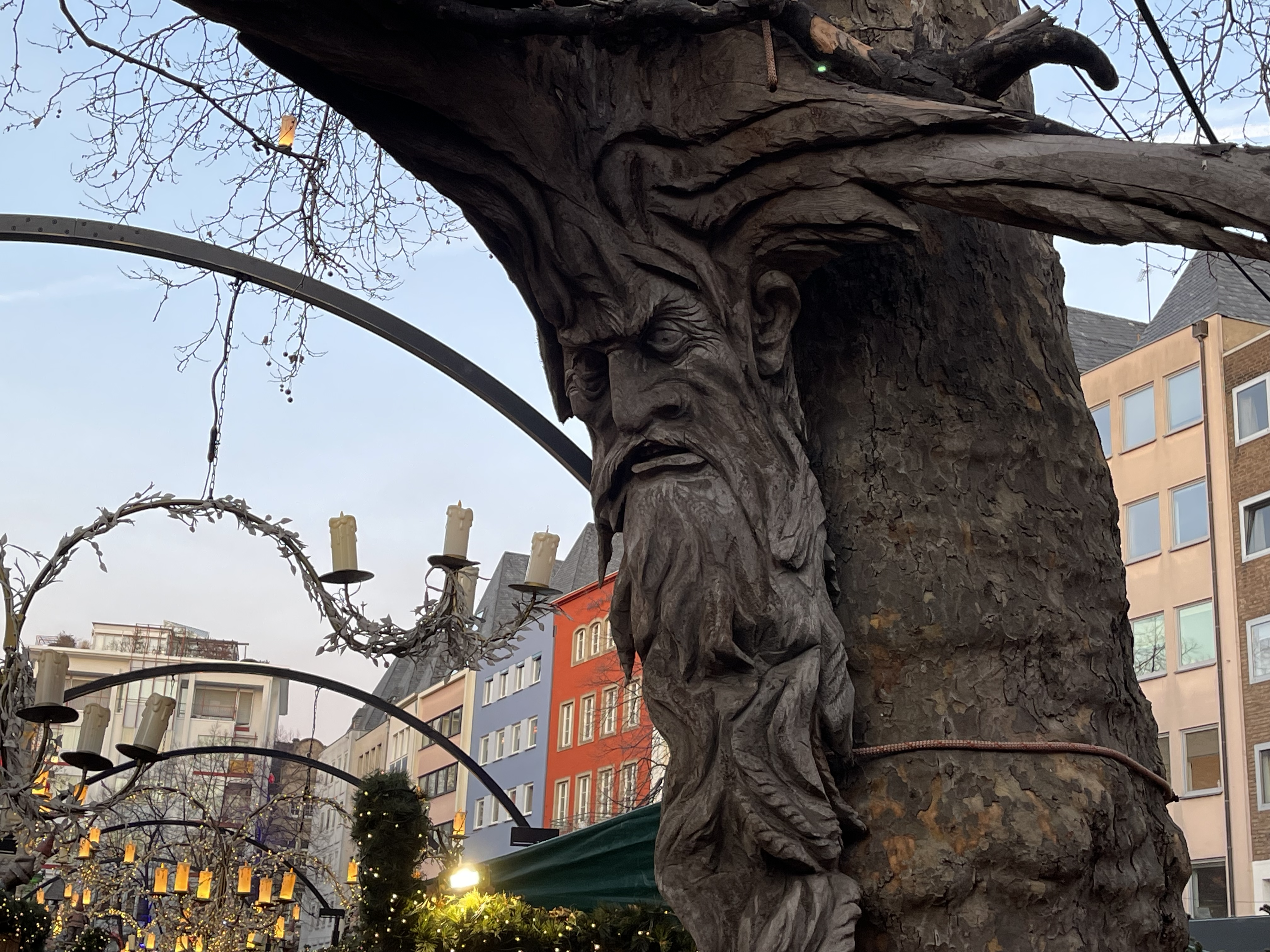
We never left the vicinity of the cathedral, so I can’t tell you about the rest of the city. We went through two Weihnachtsmärkte but only purchased a small bag of roasted chestnuts and made a donation to an organization that is dedicated to removing trash from the Rhein. The Christmas market in the cathedral court had an unpleasant and unidentifiable smell so we didn’t stay too long. The second market was much nicer: Not as crowded, and no odor. It had a fairy tale theme.

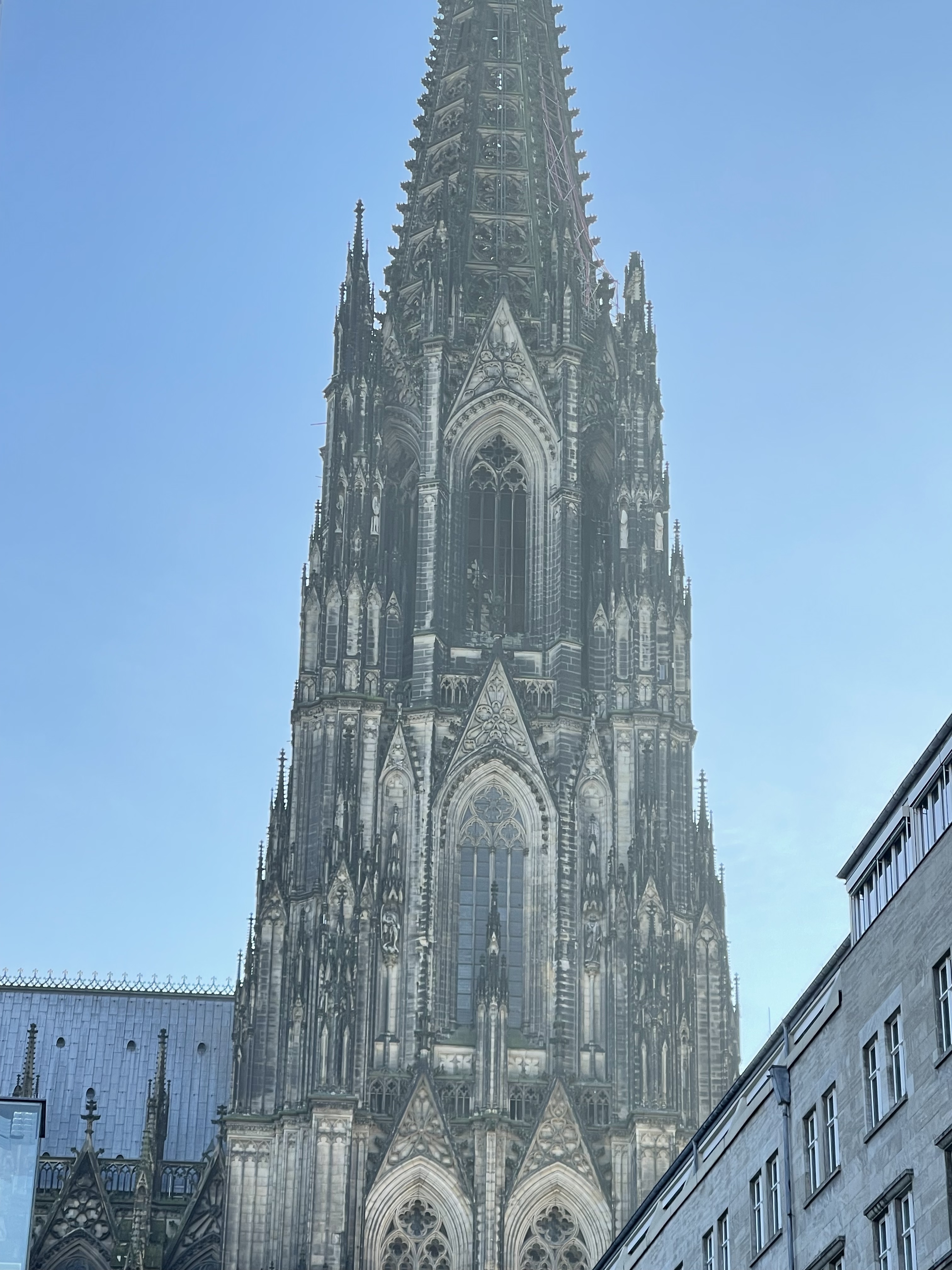
I tried to capture this “glowing” tower on the cathedral. The light was reflecting off of the surrounding building with the sun low in the west. The undersides of the arches were brighter than the underside.

Heinzel’s winter fairy tale

Tomorrow, Koblenz!

Day 2: Kinderdijk: It’s all about the windmills (and a water tower.)

After sailing all night, most of the passengers woke up on an overcast, blustery morning, with windchill at about 3° C (37° F) to something approximating this view. Kinderkijk is a World Heritage Site, and all 19 of the windmills, built centuries ago, still work. A tour guide told us that one may, upon conclusion of a 2-year education and passing a physically demanding test, rent one of these mills to live in and the rent is pretty cheap. He didn’t mention how long the wait list is, or if there is one.

According to the tour guide, Ukrainian refugees are living in the windmill shown below, though it can’t be very many. We saw the interior of a mill, and there’s about as much floor space as a single-bedroom apartment in the cheap part of town. They were built around 1740, and though their function has been replaced by modern pump stations, they still wor k and could be used if the modern plumbing stopped working.

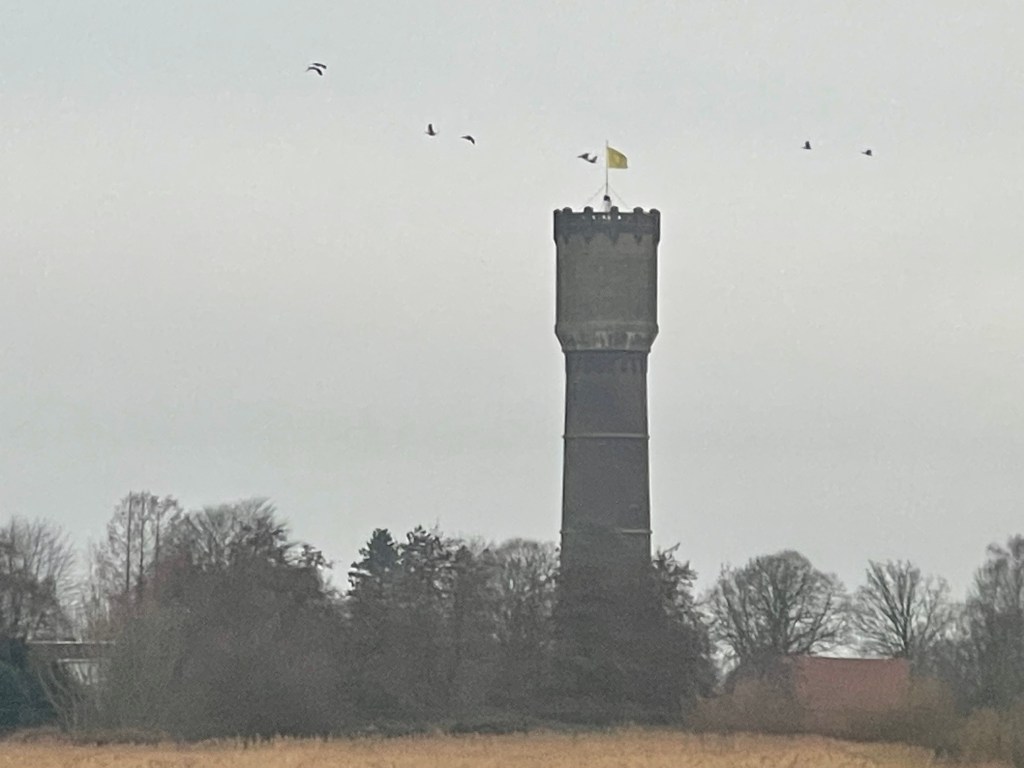
We also saw this tower, which, according to Google, is an unused water tower and a historical monument.

Sometimes the wildlife cooperates with the photographer. I only needed a few seconds for the geese to fly into the field of view.

Built in 1867, the water tower served as a backup to the windmills in times of high water, helping to keep the surrounding polders dry. There is a museum in the tower, but the tour guide never mentioned it, and we didn’t have time to visit it. The tower is 33 meters (109 feet) tall and 18 meters (59 ft) wide at the base.

Tomorrow we visit Cologne.

Day 1. Portland, Oregon to Amsterdam

It’s 03:30 on Sunday morning, and suffice it to say that my circadian rhythm is seriously messed up. While I’m sure that things will settle down in a day or two, it’s annoying.

We woke up at 06:30 on Friday to finish packing things like toiletries and last-minute additions to our suitcase inventory, made it to PDX by 10:00, and the plane departed right on time at 13:20.

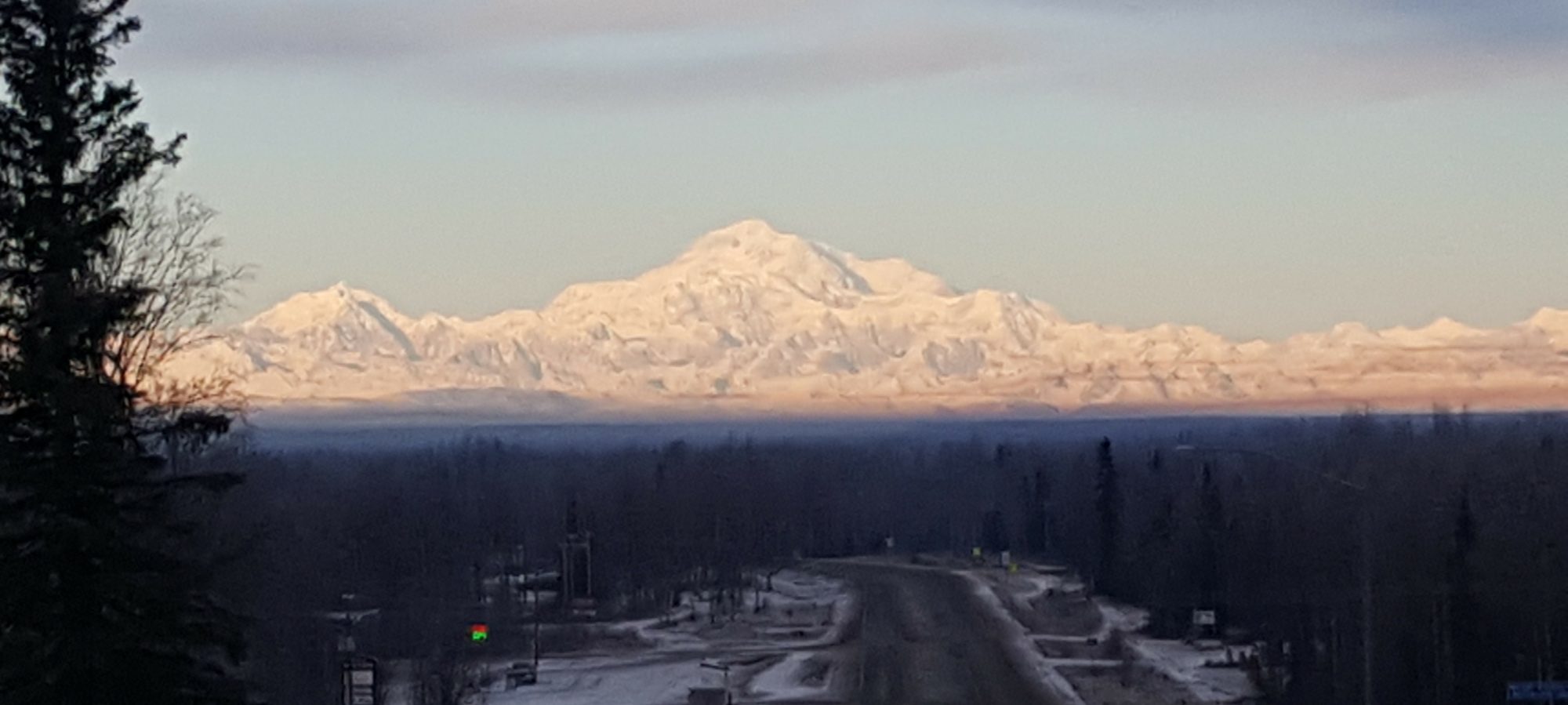
I managed to get this photo of Mt. Hood while flying over Washington State with the iPhone. I discovered a good argument for dedicated cameras is manual focus. The iPhone wanted to focus on the window pane, and I had to do some manipulating to get it to focus on the damn mountain, and even then it was a dynamic thing, going in and out of focus. I waited until the mountain could be seen clearly before clicking the picture and it took several attempts to get this result, and I’m still not quite happy with it.

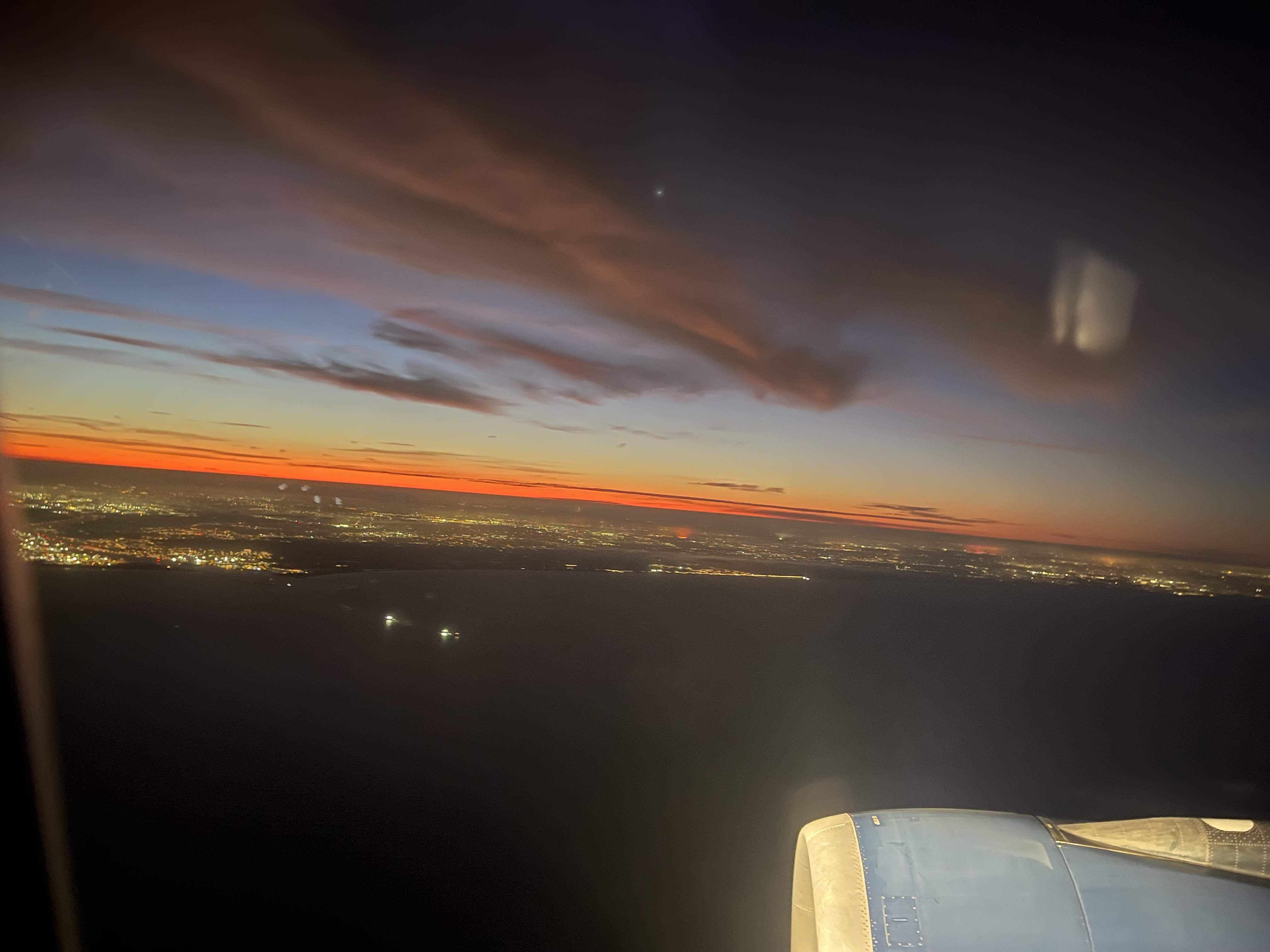
While the seats in Premium Economy weren’t uncomfortable, I could not get comfortable enough to fall asleep. We made it to Amsterdam at 07:30 local time, and I just had to take this picture of the sunrise.

The starboard engine is illuminated so brightly because the landing lights were on, and that’s what the camera wanted to focus on. Fortunately, you can set the f/stop on an iPhone, so I cranked it as far up as possible while still getting the colors of the sunrise, giving a deep field of focus. Welcome to Amsterdam!

Amsterdam airport is huge! The aircraft taxied forever. Beth joked that we were going to get a tour of the city from the Airbus 330. We taxied for at least 15 minutes. Once we disembarked, things went smoothly. We breezed through passport control, and as far as we could tell, our luggage wasn’t searched. It was a short walk to where gofers from Viking Cruise Lines wrangled us into vans to take us to the docks.

Beth rode shotgun and reported that the driver ran through at least three red lights. Maybe it was the driver, or maybe Amsterdamers consider traffic signals to be mere suggestions, like New Yorkers. We only have the one data point, so it’s impossible to tell.

We finally arrived at the riverboat Viking Bragi but our stateroom wasn’t ready for us. We grabbed sandwiches in the lounge and tried to stay awake. By this time it was 11:30 locally and 02:30 in Oregon. Our stateroom became available at noon, and though the activities director announced that a tour of the city was available, we headed straight to bed. We only woke up long enough to participate in the mandatory safety drill.

We were instructed to put on the buoyancy vests located in the room. Instead of finding them in the convenient spot which was marked with a stylized life vest, they were stowed under the bed. Not just under the bed, but in the least accessible point under the bed, so that I had to get down on my knees, and then on my stomach to reach them. I am certain that this is a test to see if any passengers have orthopedic problems. I have abused my knees sorely in my lifetime, and they told me that there were only so many attempts to get the life vests left in their repertoire. So when the drill was over, I put them back in the spot with the life vest icon. However, while we were at dinner, house cleaning came in, made our beds, and threw the live vests back under the bed.

I told you: it’s a test. Considering that the average age of the passengers on this trip is about five years older than we are, I think it might also be an attempt at population control.

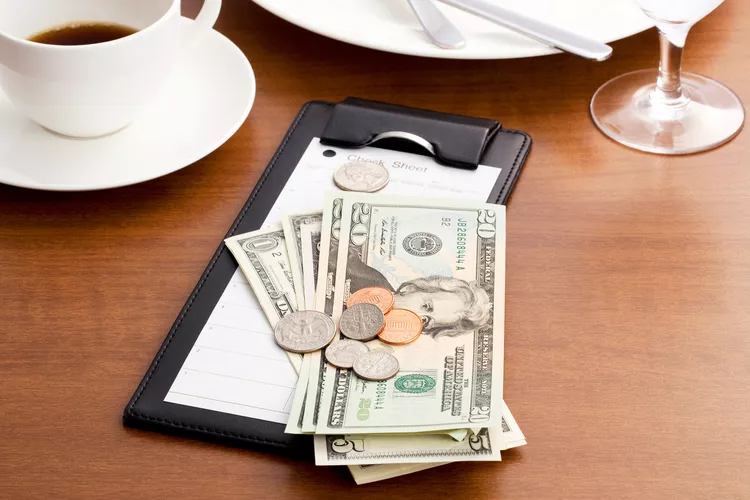
Three days to go. To Tip or Not to Tip?

I have a question for all you world travelers and residents of Europe.

Viking River Cruises has advised us, as American travelers, to always tip generously when we dine at local restaurants while in Europe. However, I’ve been told time and again, and have watched YouTube videos that say, “The rest of the world thinks that the American Tip Culture is weird, and servers in Europe actually get paid enough so that they don’t rely on tips.”

My intuition tells me that Viking wants to make sure that the people in European ports stay happy that their cruise line is docking in their city. “Here comes the Americans,” the locals might say. “Expect more money!”

Does Viking advise passengers from other countries to tip well?

If Americans stopped tipping so generously in Europe, would they be less welcome?

Do international relations have to be so transactional?

I’m looking forward to your feedback in breathless anticipation.